I Had No Gun in That Room. They Had Thirty
 bhavtarini.com@gmail.com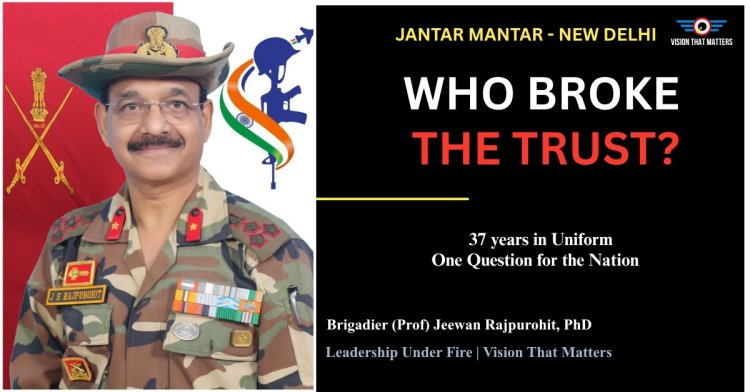
A Cambodia Negotiation That Redefined Leadership, Listening, and the Power of Human Connection: By Brigadier (Prof) Jeewan Rajpurohit, PhD
When the Mission Was More Than Military
Cambodia, 1993. The province of Kampong Cham.
Four months after arriving as part of the Indian battalion under the United Nations Transitional Authority in Cambodia (UNTAC), I received a mission unlike any other.
My Commanding Officer looked at me and said simply:
"Disarm the Khmer Rouge rebels in our area of responsibility."
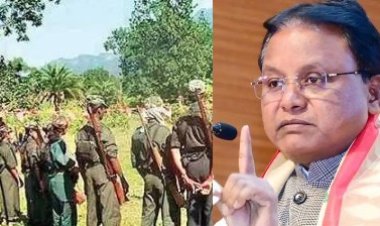
It sounded like an order, but in reality it was a challenge that had no established solution. The Khmer Rouge had already rejected the UN's formal disarmament process. There was no operational blueprint, no diplomatic framework, and no guarantee of success.
The only weapon left was conversation.
A Nation Scarred by War
To understand the significance of that mission, one must first understand Cambodia.
The country was still recovering from one of the darkest chapters in modern history. Under Pol Pot's Khmer Rouge regime, nearly two million Cambodians had perished. Intellectuals, teachers, doctors, professionals, and young adults were systematically eliminated.
In 1993, villages were filled mostly with children, women, and the elderly. An entire generation that should have been rebuilding the nation had disappeared.
This was the fragile society UNTAC had come to help restore through free and fair elections.
A Mission That Could Not Be Declined
As the elections approached, Khmer Rouge attacks intensified.
On 3 May 1993, one of our patrols was ambushed. Despite suffering severe injuries to both hands, Subedar Rewel Singh led his men courageously and repelled the attackers, earning the Kirti Chakra for his extraordinary bravery.
My Commanding Officer knew military force alone could not secure lasting peace. He wanted to attempt something far more difficult—opening a dialogue where none existed.
As I would later realise:
Force can clear a road. Only listening can open a door.
The Invitation That Came With a Condition
After weeks of quietly reaching out through local leaders, government officials, military contacts, and even networks connected to Prime Minister Hun Sen, a message finally arrived.
The Khmer Rouge had agreed to meet.
But there was one condition.
I had to come alone.
Unarmed.
They would not
It was a choice between personal safety and the possibility of peace.
I chose to go.
The Room
The meeting took place inside an old French colonial building within our unit's area.
Around thirty to forty armed fighters filled the room. Ten were senior commanders who had spent years fighting in the jungles.
Every one of them carried a weapon.
I carried none.
Instead of taking the head of the table, I deliberately sat alongside them. Leadership was not about asserting authority that day—it was about creating enough trust for a conversation to begin.
Listening Before Speaking
Through my interpreter, I invited them to speak openly.
The senior commander leaned forward.
"Captain, I am not here to surrender. I am here to tell your force that we will capture the whole of Cambodia. This is our land. UNTAC will have to flee."
The room erupted with laughter and confidence.
I smiled.
I nodded.
I did not interrupt.
I did not challenge them.
I simply listened.
One after another, every commander spoke. Every grievance, every accusation, every declaration was heard without argument or judgment.
Slowly, something began to change.
The Turning Point
After nearly an hour, one of the commanders finally asked:
"Young Captain, we admire that you have accepted everything we have said. But is that actually possible?"
That single question created the opening I had been waiting for.
Rather than presenting an argument, I asked one question.
"Commander, what do you think is more important in life—the smiling children waiting at home, or the guns threatening their future?"
Silence filled the room.
For the first time, the conversation shifted away from ideology and toward humanity.
I acknowledged their fears.
I acknowledged their concerns.
Then I asked them to imagine a future where their children could live without fear and where respect did not require carrying a weapon.
It was no longer a negotiation.
It had become a shared reflection.
When the Guns Came Down
Over the following weeks, several hundred weapons were voluntarily handed over by local commanders.
M16 rifles.
Rocket-propelled grenade launchers.
Carbines.
This was not an official surrender.
It was a local understanding built entirely on trust and dialogue.
When I reported back, my Commanding Officer looked at me, smiled, and said only two words:
"Shabash, Pandit."
Nothing more needed to be said.
A Victory Beyond the Battlefield
The elections were successfully held between 23 and 28 May 1993.
Nearly 89 percent of eligible Cambodians cast their vote.
Our battalion received a United Nations citation for the successful conduct of elections in Kampong Cham.
As I walked out of that building, I was holding hands with the Khmer Rouge commander.
There were no raised weapons.
Only two men who had chosen conversation over conflict.
For me, that was the only victory that truly mattered.
The Leadership Lesson Every Boardroom Needs
Centuries ago, Kautilya described four instruments of leadership:
Saam – Conciliation
Daam – Inducement
Bhed – Division
Dand – Force
Every leader possesses all four.
The true test of leadership lies in knowing which one the moment demands.
Too often, leaders enter difficult conversations determined to speak louder, argue harder, and present more evidence.
Cambodia taught me something different.
The person who speaks the most rarely learns the most.
The person who listens the longest rarely loses.
The Room You Will One Day Walk Into
Every leader eventually encounters "The Room."
It may not contain rifles or soldiers.
It may be a boardroom.
A negotiation table.
A crisis meeting.
Or a difficult conversation with someone who refuses to listen.
In those moments, authority alone is rarely enough.
People begin to change only after they feel genuinely heard.
Listening is not weakness.
It is leadership in its purest form.
Final Reflection
I was not a trained negotiator.
I was simply a young Army Captain who trusted that patience, respect, and sincere listening could achieve what force alone could not.
Looking back, I still cannot say exactly what changed in that room.
But I know this:
The weapons came out.
The elections were held.
Lives moved forward.
And ever since, I have believed that the greatest victories are not won by those who speak the loudest—but by those who listen the longest.